13 models · Product category
Metal Bunk Beds
Double-decker steel beds with guard rails and attached ladders for high-density boarding
About the Metal Bunk Beds range
Guide by FurnEdu · educational furniture manufacturer since 2007
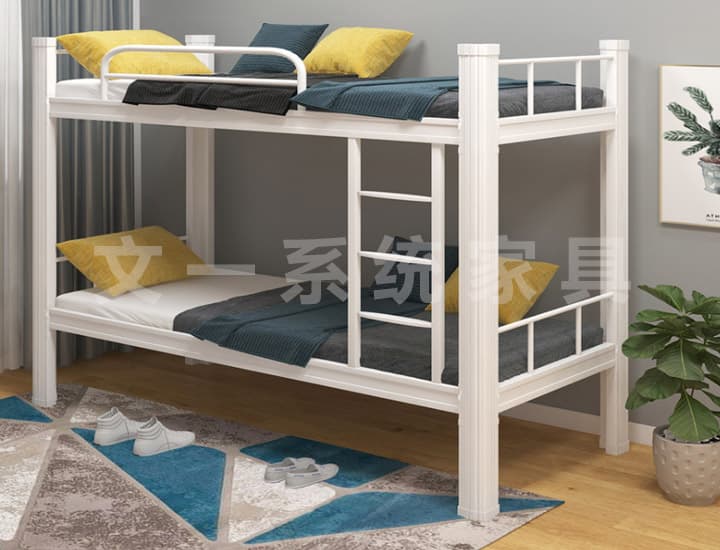
Metal Bunk Beds are double-level steel beds used where sleeping density matters most: high-occupancy boarding, short-stay accommodation and campus housing with a tight floor area per student. The frame is the same structural idea as a single bed, but the consequences of a design fault are greater, because one student sleeps two metres above the floor and another sleeps beneath them. For that reason the category is specified around the upper level: the guard rail and its fixings, the ladder and its attachment, the headroom above the upper mattress and the stability of the whole assembly. The buying points below set out the checks that separate a bunk bed built for institutional use from a domestic bunk bed used at institutional scale.
Standards and materials
- Upper-level guard rails, ladder fixings and frame joints are engineered to institutional requirements, with the load rating documented for each level.
- Frames are powder-coated with plated or stainless fixings for humid climates and daily cleaning.
- Composite components are specified at ENF or E0 grade, with low-VOC finishes suited to enclosed sleeping rooms.
What to specify before ordering
- Guard rail fixed to the frame, with stated height and gap dimensions.
- Ladder attached to the frame, with non-slip treads and a stated climb angle.
- Upper and lower headroom measured in the actual room, allowing for mattress thickness.
- Anti-tip anchoring or bracing included in the delivery scope.
- A sample assembled and load-tested before the bulk order is placed.
Learning spaces using this range
How to buy metal bunk beds
Fix the guard rail, do not hook it
The rail must be bolted or welded to the frame. A removable rail is removed, and a bed without a rail is not the product that was specified. Check the rail height and the gaps on the actual sample.
Attach the ladder to the frame
A ladder that hooks over the top rail can lift off under load. Specify a ladder fixed to the frame with non-slip treads, and check that the climb does not cross another bed or block the door.
Confirm headroom above the upper mattress
The clearance from the upper mattress to the ceiling, and from the lower mattress to the upper frame, decides whether the room is usable. Measure both in the actual room and allow for the mattress thickness.
Anchor the assembly
A bunk bed should be anchored or braced where the design allows it. Include the fixing kit in the scope and confirm the wall construction, because a free-standing bunk in a busy room will move over time.
Match it to the room and the students
Bunks are not suitable for every age group or every room. The [dormitory planning guide](/knowledge-hub/space-planning-guides/student-dormitory-furniture-planning-guide) explains when a loft or apartment bed is the better answer for the same footprint.
13 Metal Bunk Beds models
View full catalog →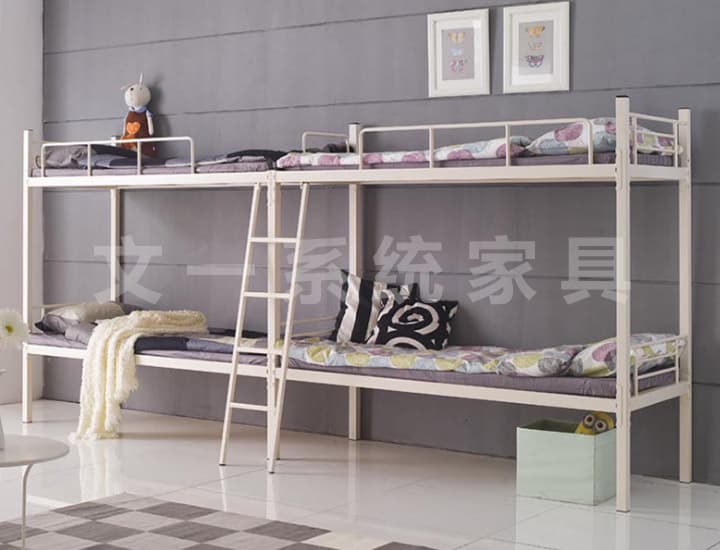
Student Metal Bed 048
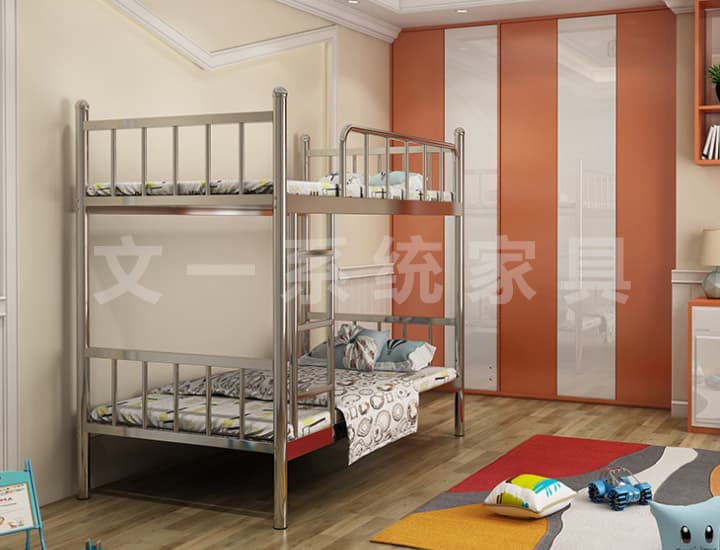
Stainless Steel Bunk Bed 038
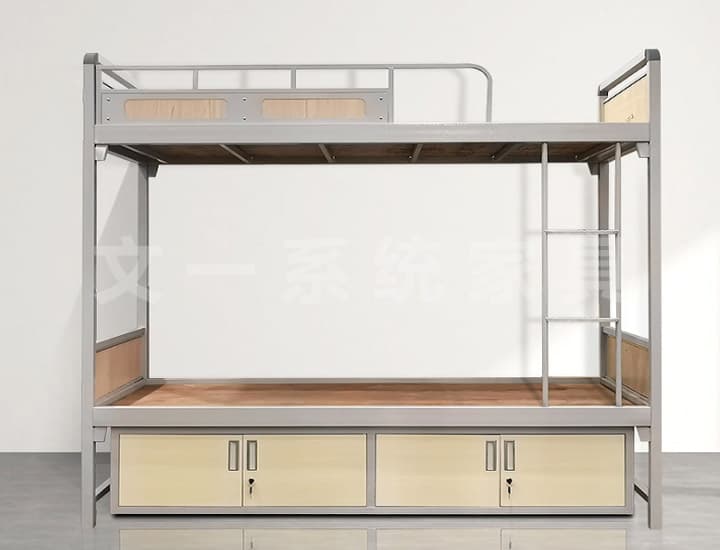
Bunk Bed with Wooden Shoe Cabinet 022
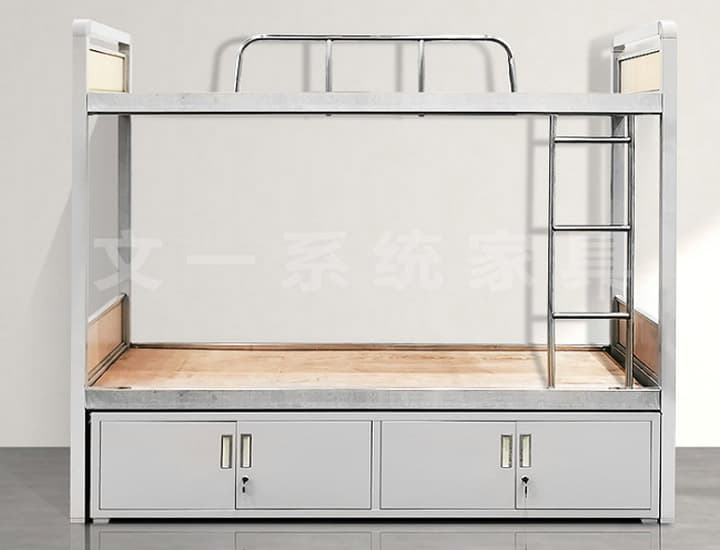
Bunk Bed with Wooden Shoe Cabinet 021
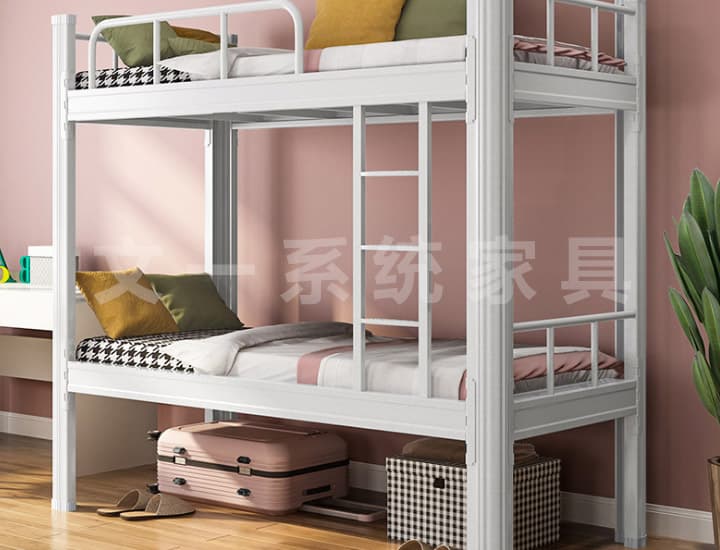
Premium Knock-down Metal Bunk Bed 007
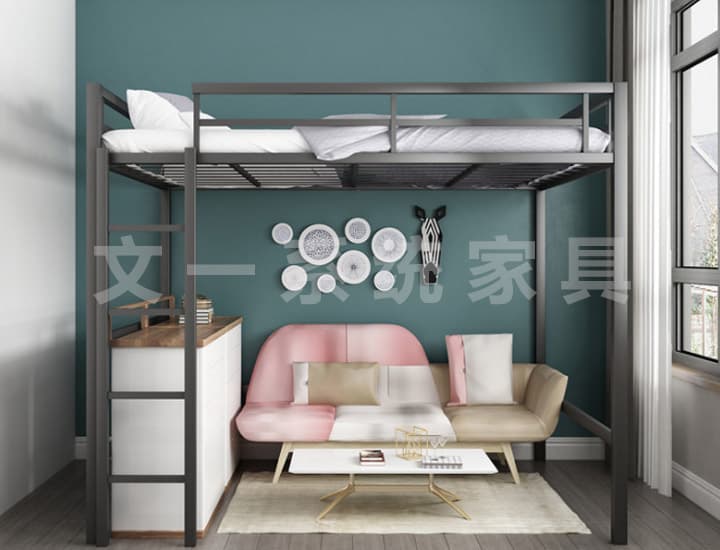
Premium Metal Bunk Bed 008
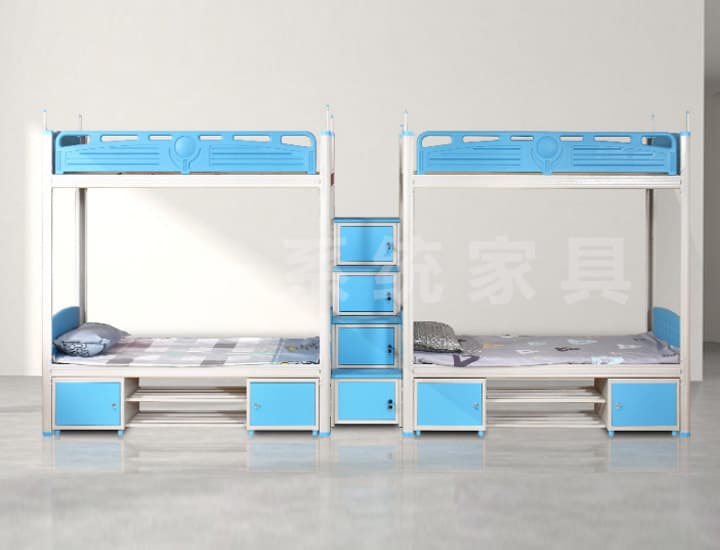
Bunk Bed with Plastic Guardrail & Shoe Rack 023
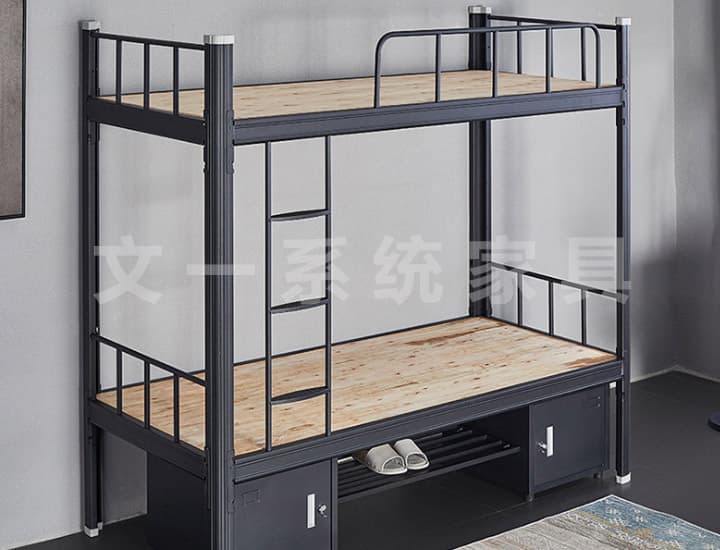
Bunk Bed 001
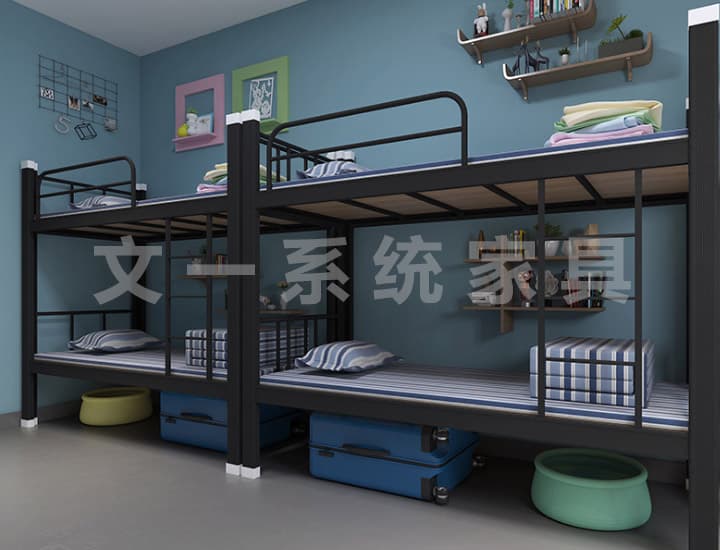
Bunk Bed with Shoe Cabinet 06
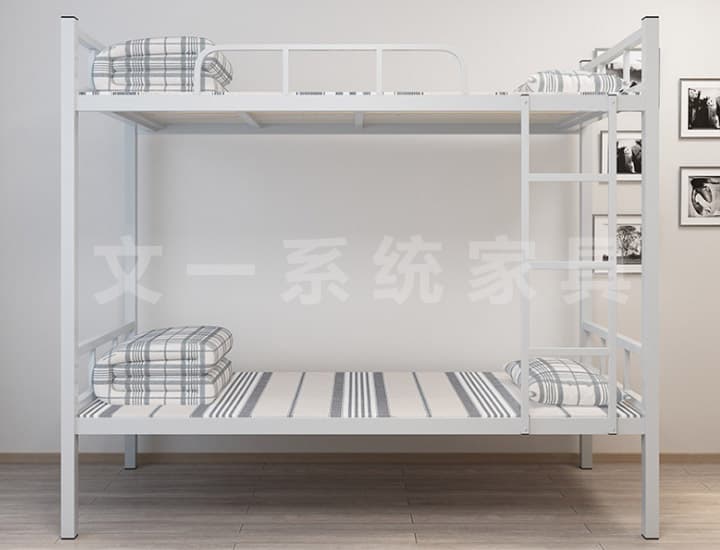
Metal Bunk Bed 009
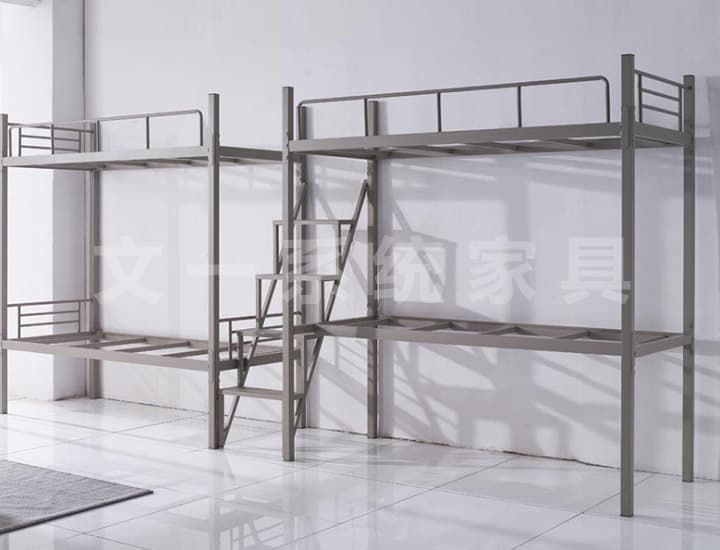
Student Bunk Bed 043
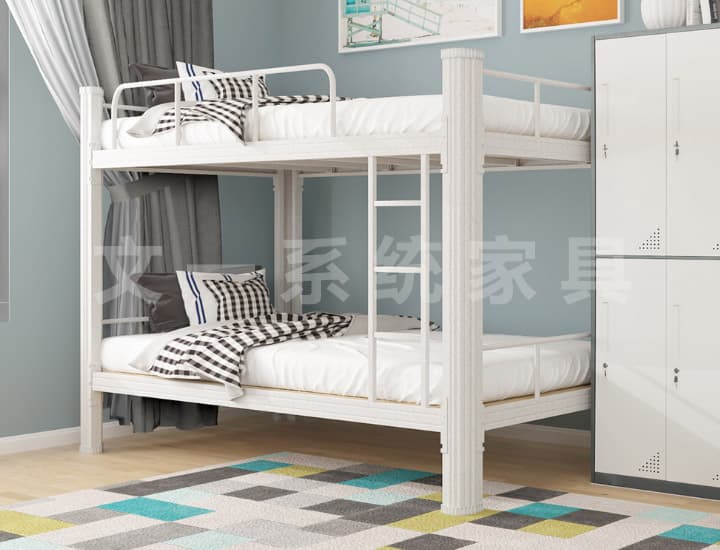
Student Bunk Apartment Bed 31
Student Metal Bunk Bed 033
Metal Bunk Beds — frequently asked questions
Answers by FurnEdu · educational furniture manufacturer since 2007
Are bunk beds suitable for primary school boarders?
They can be, with a fixed guard rail, an attached ladder and adequate headroom, but the age and behaviour of the students matter. Many primary boarding houses use low bunks or single beds instead, because younger children need more supervision around ladders. Check local guidance and the school safeguarding policy before specifying.
What is the minimum headroom above a bunk bed?
Enough for a student to sit up and get in and out of bed without contact with the ceiling or the upper frame. The exact figure depends on the mattress thickness and the age group, so measure the actual room and check both levels rather than relying on a standard bunk height.
How do I stop a bunk bed from wobbling?
Anchoring to the wall or bracing between the two ends removes most movement, and a frame with welded rather than bolted corner joints resists racking better. Check the assembly on a sample, including the fixings, and confirm that the floor is level before installation.
Can bunk beds be split into two single beds?
Some designs allow it, which is useful where a boarding house may change its occupancy model. If that flexibility matters, specify it explicitly and confirm that both configurations meet the same load and safety requirements. A bed designed to split is not identical to a dedicated bunk.
How often should bunk beds be inspected?
At least once a term, with a documented check of the guard rail fixings, the ladder attachment, the frame joints and the anti-tip anchoring. Replace any missing or loose fixing immediately. A simple inspection sheet per room is enough, and it becomes the record a school needs if a question is ever raised.
Related buying guides
Student Dormitory Furniture Planning: Beds, Storage and Safety
How to plan student dormitory furniture: bed layouts, storage, guard rails, room density and the safety details that boarding schools must specify.
School Furniture Safety Standards Compared: EU, US, China and Japan
A side-by-side comparison of school furniture standards in Europe, the United States, China and Japan, and how to build one specification that crosses borders.
BIFMA X5.5 School Furniture Certification: What Buyers Need to Know
How BIFMA X5.5 tests educational furniture, how it differs from EN1729, what a genuine test report contains, and how to word the requirement in a tender.
Need metal bunk beds for a campus project?
Send your room list, quantities and delivery country. The project team returns a specification-matched quotation with lead times, normally within one business day.
Request a quote