21 models · Product category
Apartment Beds
Raised bed units with integrated study and storage for campus housing and compact boarding rooms
About the Apartment Beds range
Guide by FurnEdu · educational furniture manufacturer since 2007
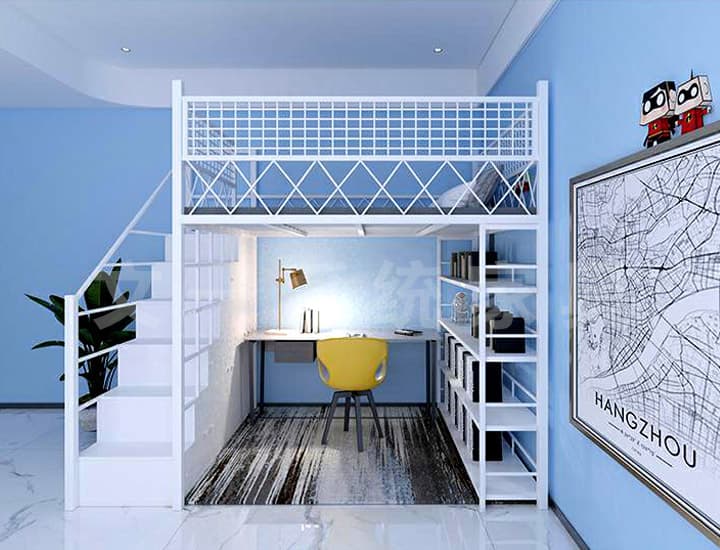
Apartment Beds are raised sleeping units that combine a bed platform with storage and study space underneath, available in metal and mixed construction as well as solid wood. The category is the practical answer to a room with one bed space and no separate study: the sleeping area goes up, and the desk, wardrobe and drawers go beneath it, so that a single footprint serves two daily activities. Because these units are used every day and rarely moved, the specification should focus on stability, the quality of the ladder and rail, and the usability of the space underneath. A well-designed unit feels like a small room; a poor one feels like a bed on stilts, with a desk that is too shallow and storage that is awkward to reach. The buying points below set out the dimensions that decide which outcome a school gets.
Standards and materials
- Platform, ladder and guard rail are engineered to institutional load requirements, with anti-tip fixing supplied where the design requires anchoring.
- Metal components are powder-coated for corrosion resistance, with plated or stainless fixings recommended for humid climates.
- Composite components are specified at ENF or E0 grade, with low-VOC finishes for sleeping rooms and enclosed spaces.
What to specify before ordering
- Platform height, under-bed headroom and desk depth all stated and checked against the room.
- Guard rail height, length and gap dimensions documented.
- Ladder attached to the frame, with non-slip treads and a stable base.
- Storage capacity per student stated in litres or drawer count.
- Anti-tip fixing kit included and compatible with the wall construction.
Learning spaces using this range
How to buy apartment beds
Measure the usable space underneath
The desk depth and the headroom below the platform decide whether the under-bed area is usable for study. Confirm both against the actual unit, not against a summary drawing that omits the frame depth.
Set the bed height for the room
A higher platform gives more usable space below but needs more ceiling clearance and a taller ladder. Confirm the clear height in the room and the ladder angle before fixing the platform height.
Check the guard rail and ladder fixing
Both must be attached to the frame rather than hooked on, with no gaps that could trap a limb. Test the assembly on a sample and ask for the fixing specification in writing.
Plan storage as part of the unit
Drawers, a wardrobe and shelving built into the frame use volume that would otherwise be empty. Specify the capacity per student, and confirm that drawer runners and hinges are serviceable.
Confirm anti-tip anchoring
A raised unit is stable in normal use but must be anchored where the design allows it. Include the fixing kit and the wall type in the delivery scope, and see the [student dormitory pages](/spaces/student-dormitories) for room-level planning.
21 Apartment Beds models
View full catalog →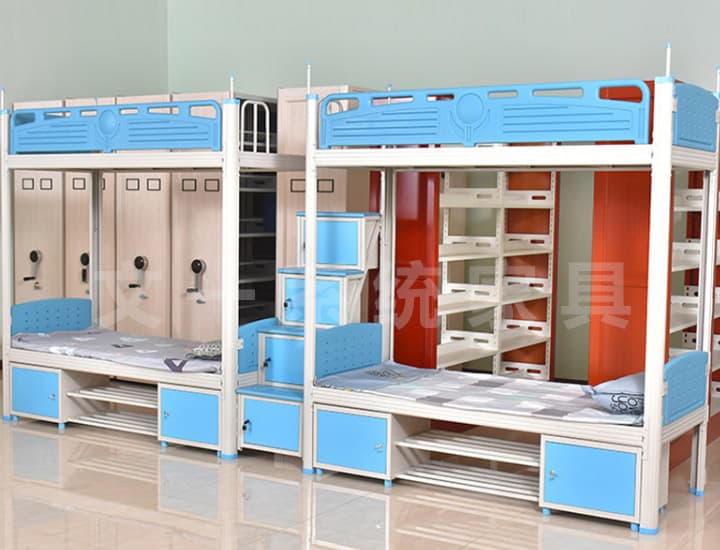
Apartment Bed with Stair Cabinet & Plastic Guardrail 036
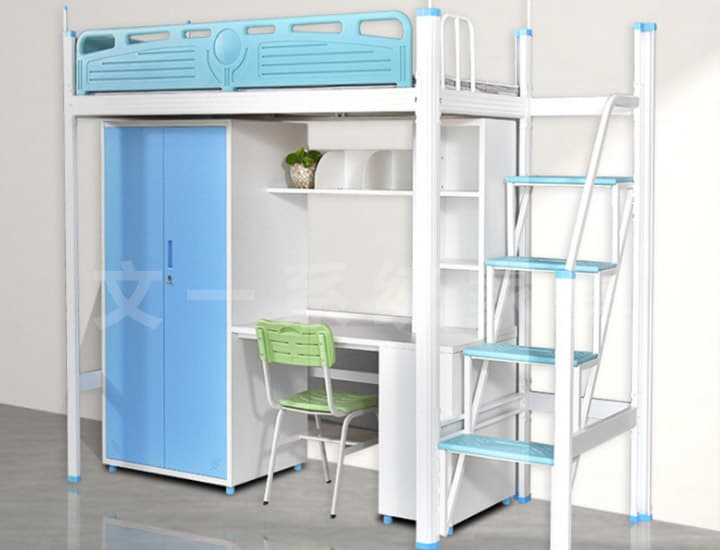
Apartment Bed with Plastic Guardrail 026
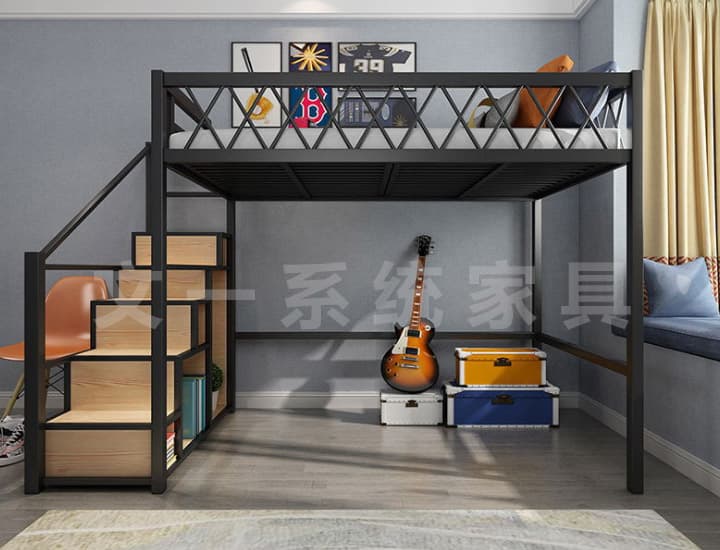
Bunk Bed 00303
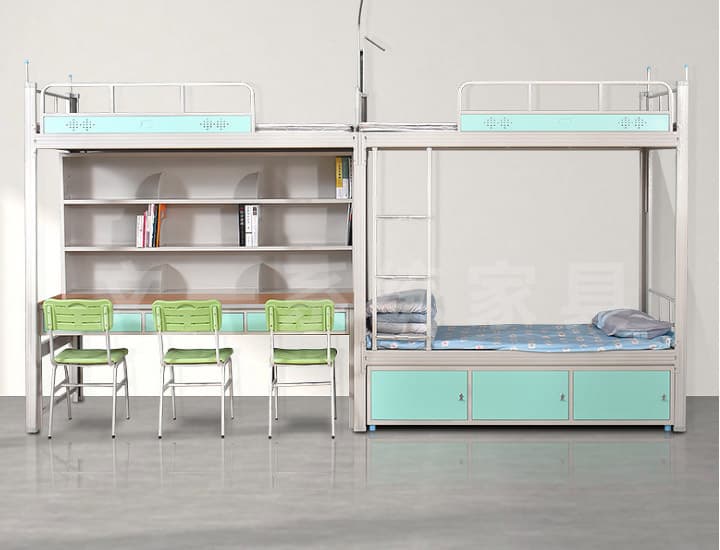
All-metal Apartment Bed with Shoe Cabinet 25
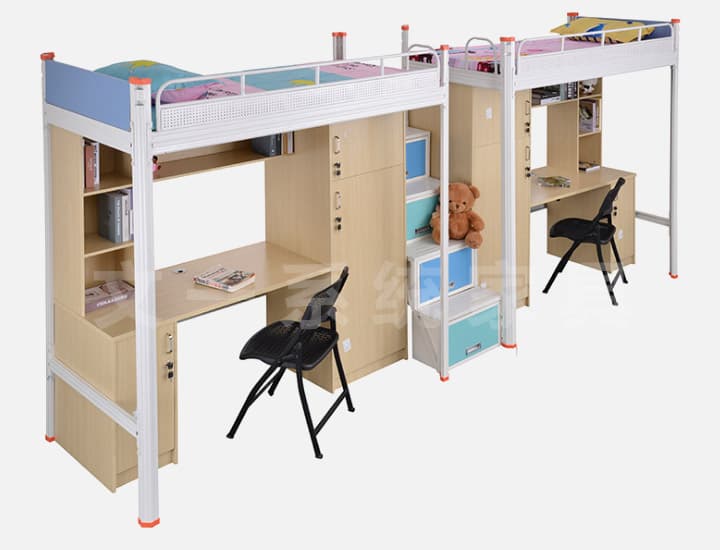
Knock-down Apartment Bed 018
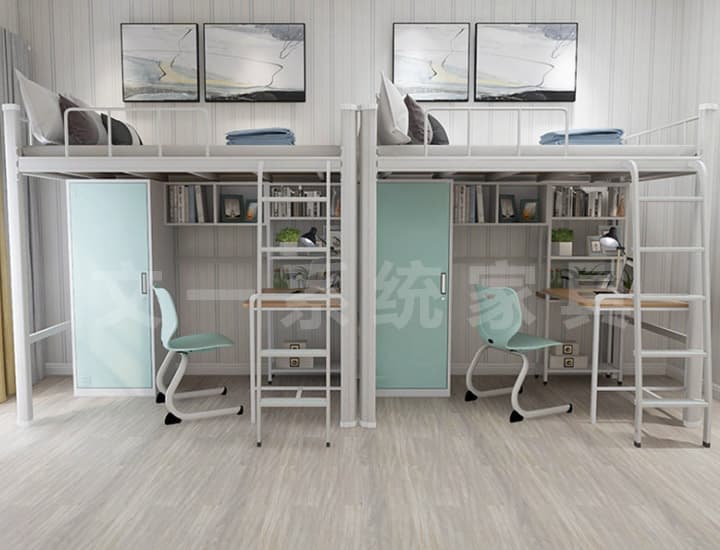
Apartment Bed with Ladder, Wardrobe, Desk & Bookshelf 034
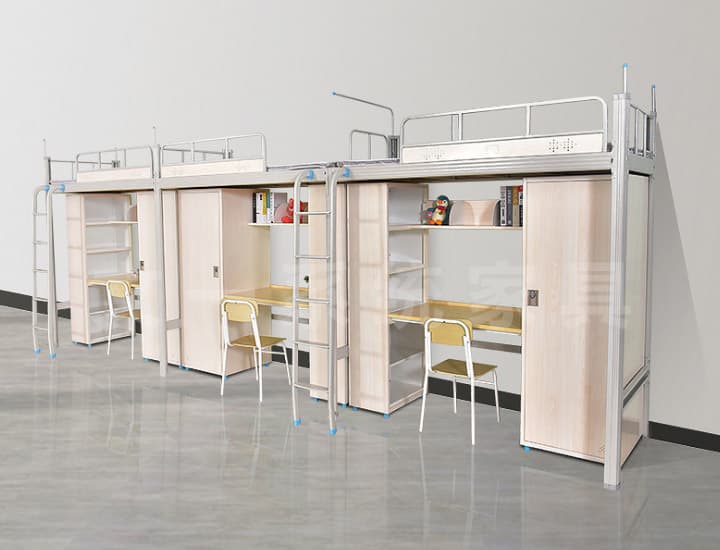
Wood-grain Apartment Bed 020
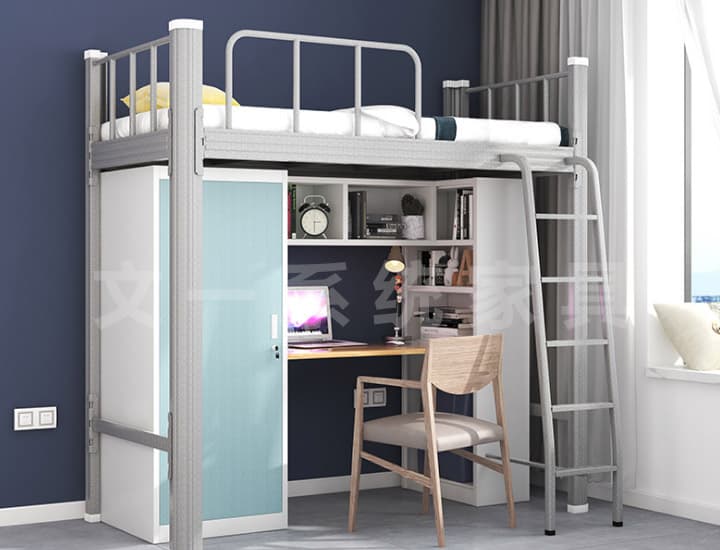
Apartment Bed with Metal Wardrobe 030
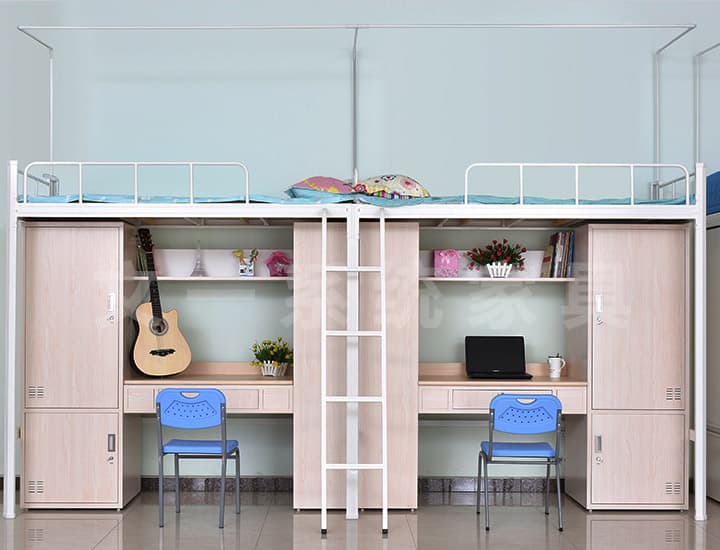
Metal Bed for Staff Dormitory 037
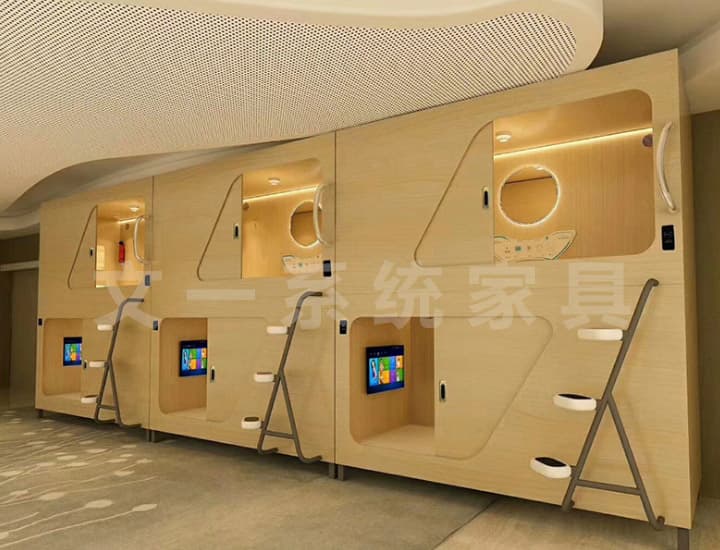
Capsule Apartment Bed 052
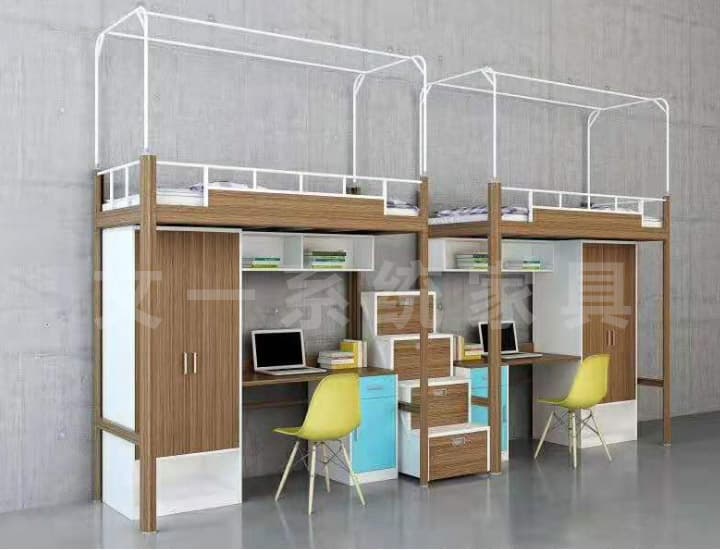
Apartment Metal Bed 013
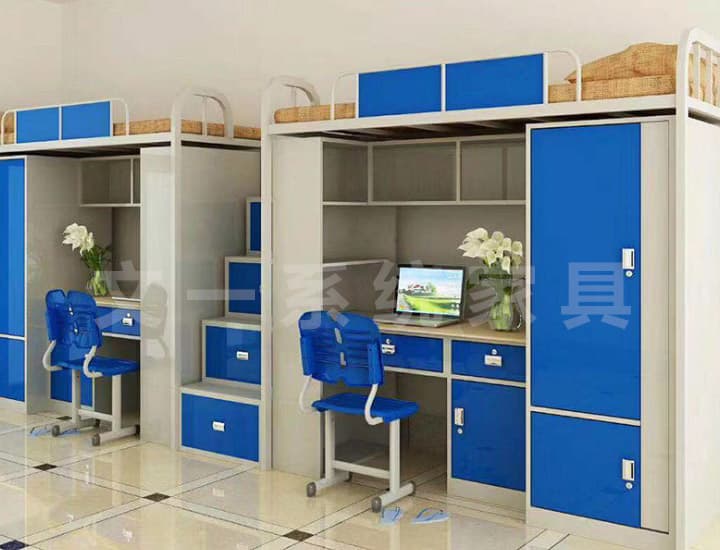
Apartment Bed with Metal Locker 015
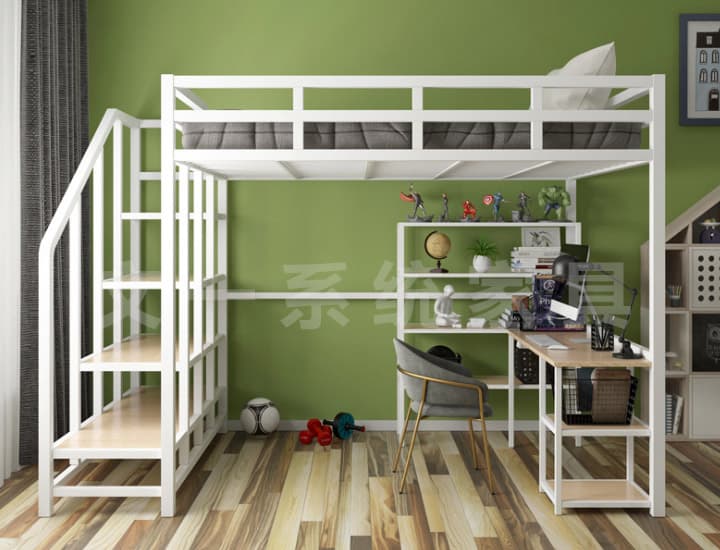
Apartment Bed 017
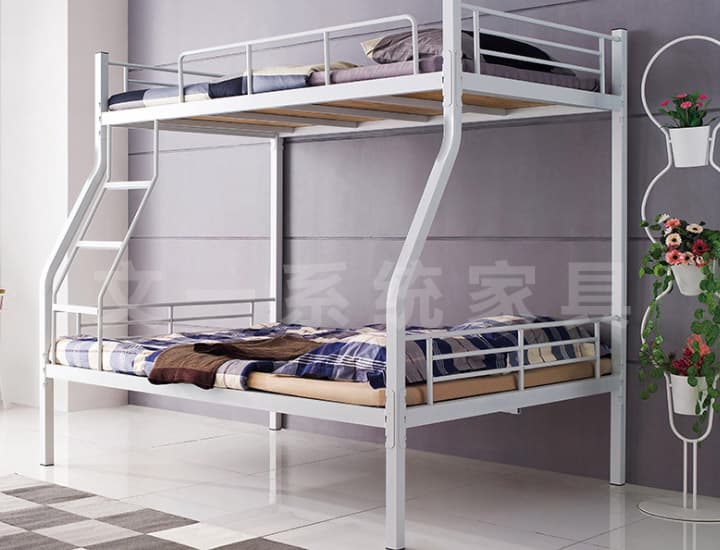
50 mm Tube Metal Bunk Bed 39
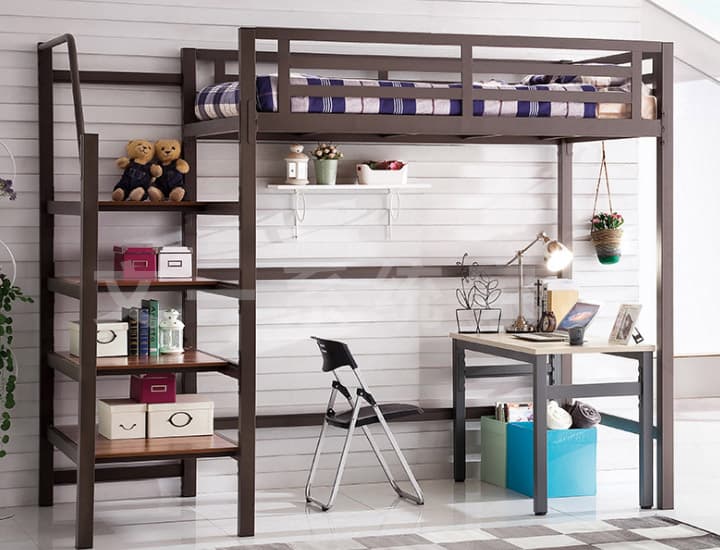
Studio Apartment Bed 045
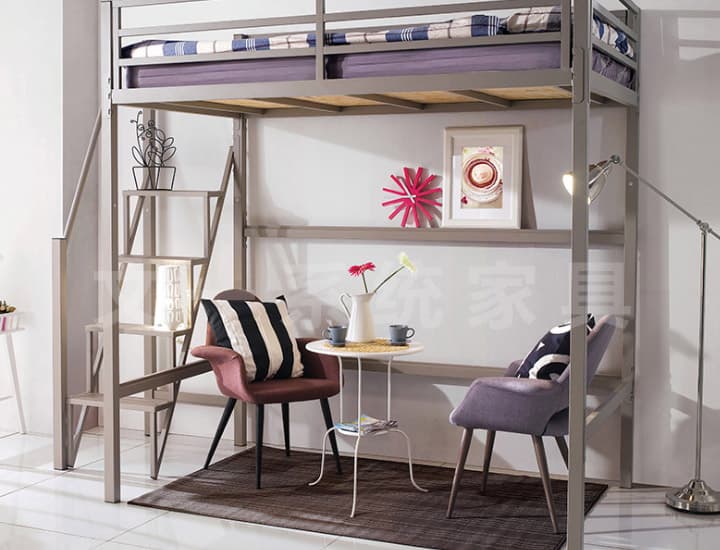
Studio Apartment Bed 046
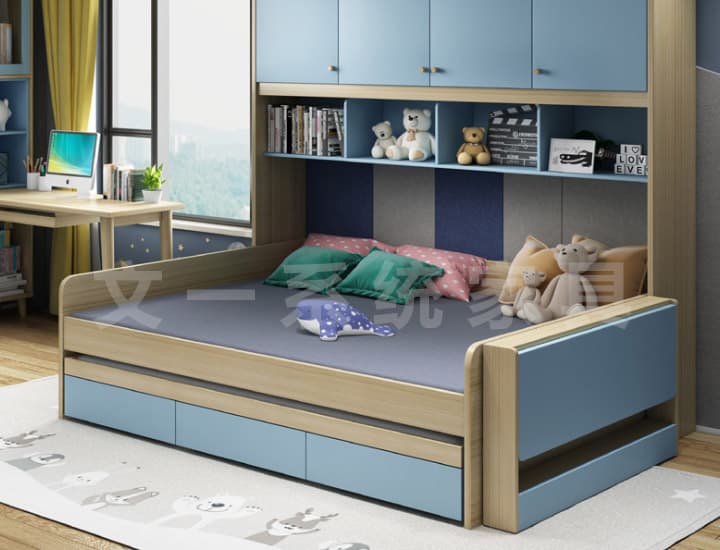
Studio Apartment Bed 053
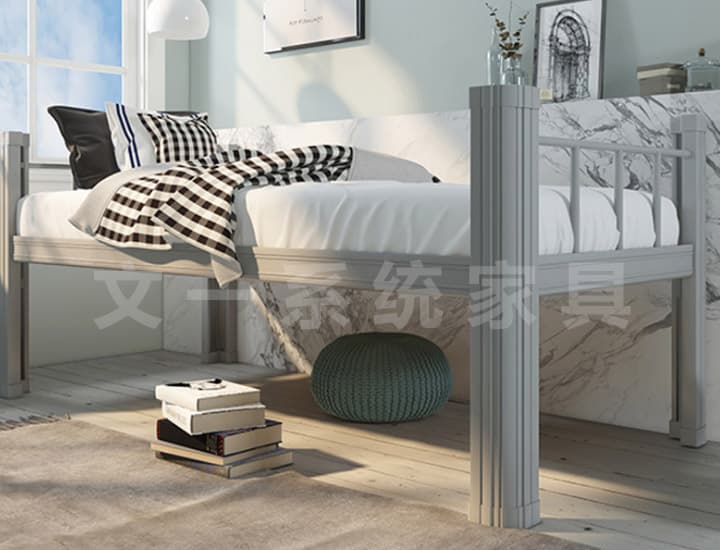
Bunk Apartment Bed 029
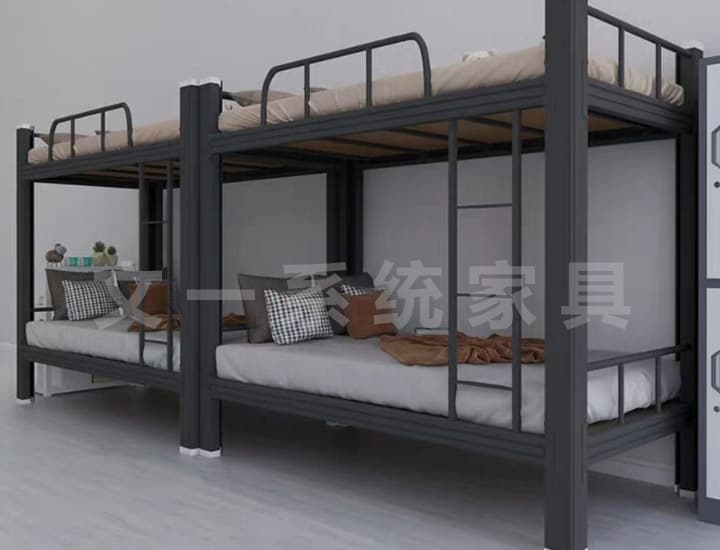
Premium Apartment Bed 014
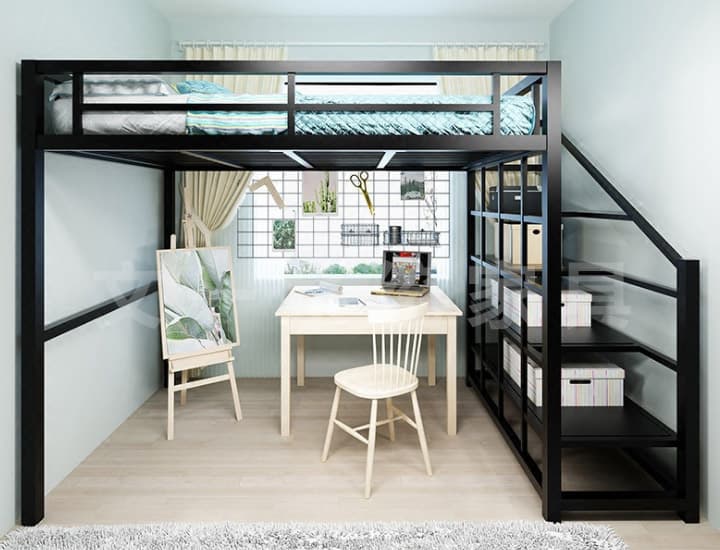
Premium Apartment Metal Bed 012
Premium Apartment Metal Bed 016
Apartment Beds — frequently asked questions
Answers by FurnEdu · educational furniture manufacturer since 2007
What is the difference between an apartment bed and a bunk bed?
A bunk bed sleeps two students on two stacked levels. An apartment bed sleeps one and uses the space beneath the platform for a desk, wardrobe and storage. Bunks maximise sleeping density; apartment beds maximise the usefulness of a single bed space.
How high should an apartment bed platform be?
High enough for a usable desk and seated headroom underneath, low enough for safe access and adequate clearance above. The right figure depends on the room ceiling and the students using it, so it should be checked against the actual room rather than taken from a standard drawing.
Are apartment beds safe without wall fixing?
A well-designed unit is stable free-standing in normal use, but anchoring is recommended wherever the wall construction allows it, particularly in rooms with several students. The specification should state the fixing method and the wall type, and the delivery should include the fixing kit.
Can an apartment bed be fitted into an existing room?
Usually yes, and the platform height and under-bed layout can often be adjusted without changing the structural design. Measure the ceiling height, the door width and the delivery route first, then confirm the platform height and the storage configuration with the manufacturer.
How long do apartment beds last?
A steel or solid wood frame in institutional use typically serves ten to fifteen years, with the mattress support and any drawer runners needing attention first. Units that allow the under-bed components to be replaced without dismantling the frame last longer in service.
Related buying guides
Student Dormitory Furniture Planning: Beds, Storage and Safety
How to plan student dormitory furniture: bed layouts, storage, guard rails, room density and the safety details that boarding schools must specify.
School Furniture Cost and Budget Guide: Per-Classroom Planning
How to budget school furniture by classroom and per student, what total cost of ownership includes, and where furniture budgets usually leak.
Custom and OEM School Furniture: A Procurement Guide for Schools
How custom and OEM school furniture projects work: sampling, tooling, minimum order logic, factory audits, quality control and logistics from brief to delivery.
Need apartment beds for a campus project?
Send your room list, quantities and delivery country. The project team returns a specification-matched quotation with lead times, normally within one business day.
Request a quote